May 9: How Victory Day Became a Tool for Justifying War
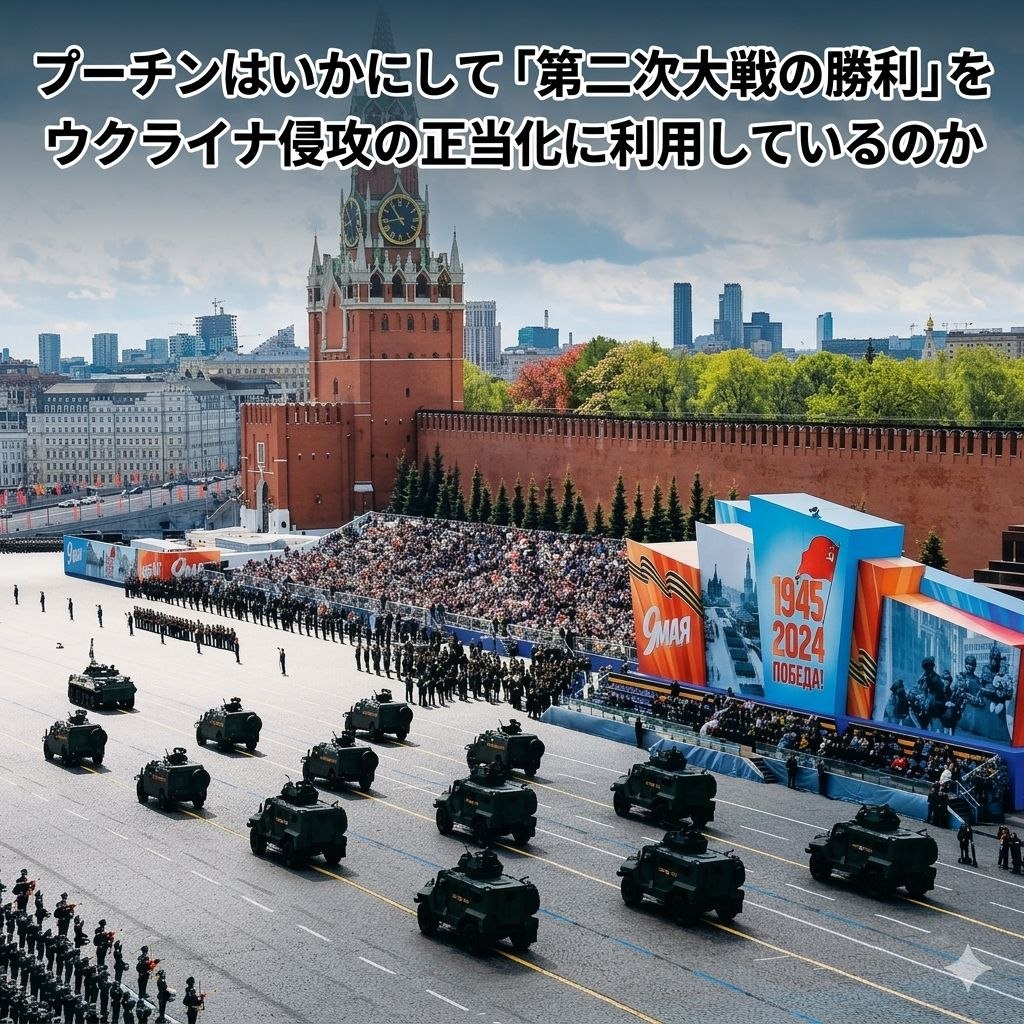
Today, May 9, Russia marks Victory Day in the Great Patriotic War, the Soviet and Russian name for the Eastern Front of World War II. During Vladimir Putin’s presidency, attitudes toward this holiday have changed dramatically, especially since the start of the full-scale invasion of Ukraine in 2022. The holiday has moved from being a day of remembrance and mourning to a large-scale ideological event — and one of the tools used to justify the state’s current policies.
In the early 2000s, Victory Day was still a “quiet” holiday with a family-oriented, memorial atmosphere, where veterans were the central figures. People visited monuments, met with relatives, watched old films, and remembered those who had died. Parades already existed, but they were far smaller than they are today. The tone on television was often one of “grief and pride.” People in Russia understood the war as a terrible tragedy that had touched the families of almost everyone in the country — a tragedy that must never be repeated.
After Putin was re-elected for a second term, from the mid-2000s onward, the state gradually began turning the holiday into one of the key elements of national identity. Mass patriotic symbols, large concerts, military reenactments, and school events appeared. The emphasis shifted toward military power and the continuity of the army. The parades on Red Square became far more spectacular, with new military equipment, aircraft, and carefully staged productions. The holiday turned into a giant state performance, combining historical myth and national branding.
Since 2014, after the annexation of Crimea and the deterioration of relations with the West, Victory Day has become an even more central symbol of state ideology. The language became harsher: public rhetoric increasingly relied on ideas of a “besieged fortress,” historical mission, continuity between generations, and Russia’s opposition to external enemies. Military themes also became more visible in everyday culture: children’s soldier-style uniforms, patriotic flash mobs, slogans such as “We can do it again,” and more aggressive symbols among parts of society. At the same time, many other Russians reacted sharply against such slogans, seeing them as a betrayal of the memory of the war’s monstrous losses.
After Russia’s full-scale invasion of Ukraine began in 2022, these changes became even more intense. The state started actively building a symbolic and emotional connection between the two wars.
One of the key elements was the rhetoric of “fighting Nazism” and “denazification.” Russian authorities and state media regularly compared the Ukrainian authorities to Nazis, used the vocabulary of World War II, and presented the current war as a continuation of the Soviet struggle against fascism.
In schools, the authorities introduced “Conversations About Important Things,” lessons in which current events are explained to students through the memory of World War II, using ideas of ancestors’ heroism, the defense of the Motherland, and the struggle against an external threat. Patriotic events and meetings with soldiers also became more frequent.
The May 9 speeches by Putin and other politicians became much more closely tied to the current war. Their remarks drew parallels between generations, repeated the theme of today’s “fight against Nazism,” invoked Russia’s historical destiny, and claimed that the country was once again facing a threat from the West.
On state television and in official media, a symbolic merging of images began: the symbols of Victory Day were placed alongside the “Z” symbol, and images of Soviet soldiers appeared next to images of the modern Russian army. At concerts, on posters, and on television, viewers could see a veteran of 1945 beside a participant in the current war, accompanied by slogans about “continuity between generations.”
This created the visual effect of “one war continuing across generations.” Gradually, the emotional focus in the minds of many Russians was rewritten: from the traditional postwar understanding that “war is a horror that must never be repeated” to an image of heroic struggle, historical mission, and the necessity of sacrifice for the state.
In Russian culture, the victory of 1945 has an almost sacred status. For that reason, the attempt to embed the current war into this historical foundation became an extremely powerful tool for mobilizing public opinion.
By using the collective trauma of their own people and the memory of victory in World War II, Putin and his government are trying to make the current war appear justified in the eyes of Russians.